How to fill in a boiler service record and the Benchmark checklist
How to fill in a boiler service record and the Benchmark commissioning checklist: what each covers, the combustion readings, warranties and notifying installs.
By Kian McKiernan, founder of Traddie. Sources linked throughout; see also our editorial policy.
Two forms, two jobs
The Benchmark Commissioning Checklist is filled in once, when a boiler is installed and commissioned. The service record is filled in every time the boiler is serviced after that. Both usually live at the back of the boiler's instruction manual, and both matter when the customer comes to make a warranty claim.
The Benchmark scheme is managed by the Heating and Hot Water Industry Council (HHIC). It places responsibility on manufacturers and installers for best practice when installing, commissioning and servicing domestic heating and hot water products in England and Wales.
Filling in the Benchmark Commissioning Checklist
The checklist is evidence that the boiler was installed and commissioned to the manufacturer's instructions and the Building Regulations by a Gas Safe registered engineer. The exact boxes vary slightly by product, but you will typically record:
- The customer, the address and the installer, with your Gas Safe registration number.
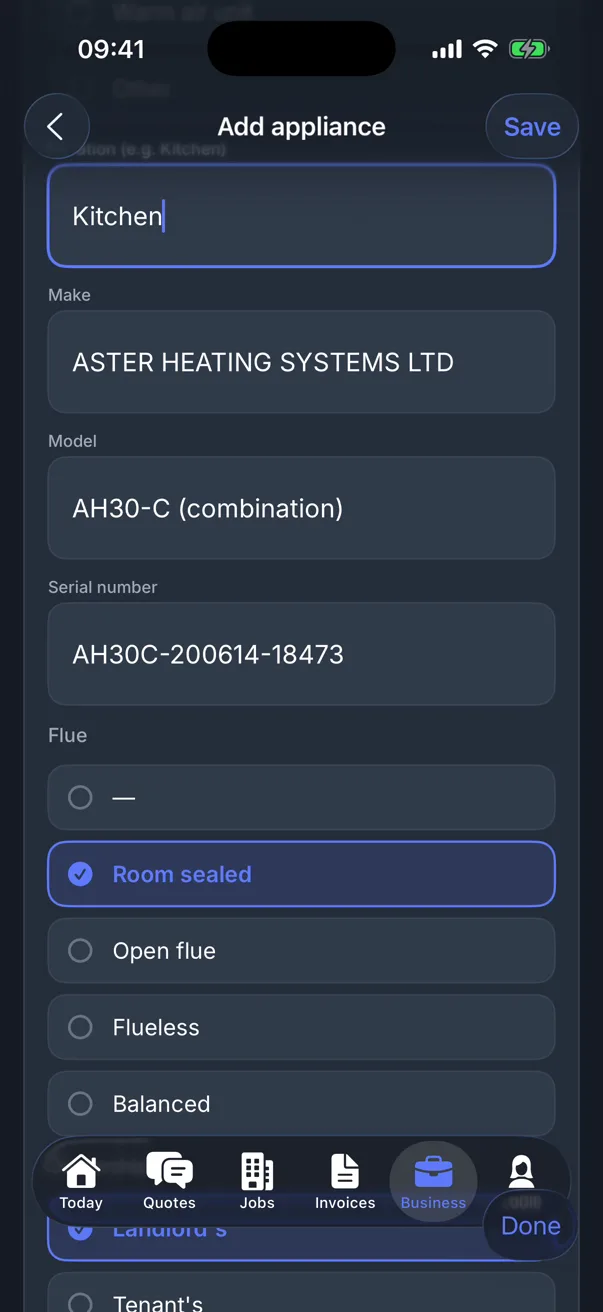
- The boiler make, model and serial number.
- The Building Regulations notification route and reference.
- The controls fitted, such as the thermostat, programmer and any weather or load compensation.
- That the system was cleaned and flushed, and inhibitor and a filter fitted where required.
- Gas rate, burner operating pressure or heat input, and the flue gas analysis readings at maximum and minimum rate.
- Condensate pipe installation and termination for condensing boilers.
- Hot water performance where relevant.
- Confirmation that you have explained how the system works and left the manual with the customer, with both signatures.
Filling in the service record
At each service, follow the manufacturer's instructions, then record the work on the service record. A good entry covers:
- The date, your name, company and Gas Safe registration number.
- What you did: cleaning, parts replaced, seals and gaskets checked.
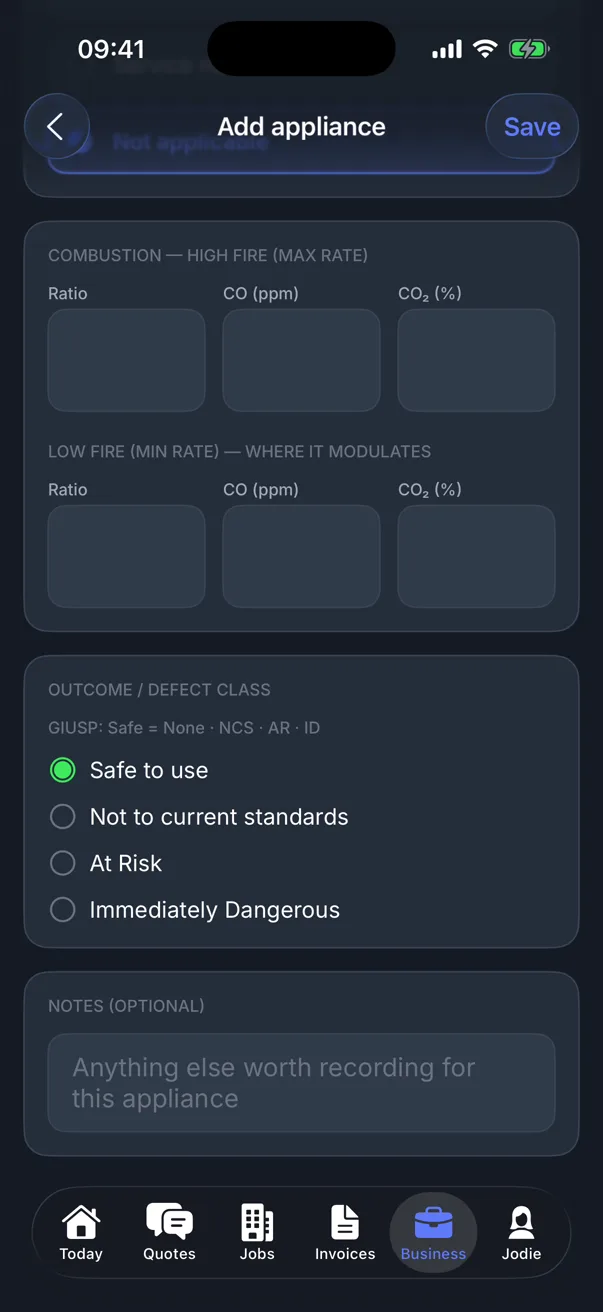
- Flue gas analysis readings: CO in ppm, CO2 percentage and the CO/CO2 ratio, against the manufacturer's figures.
- Gas rate or burner pressure.
- That the flue, ventilation and condensate were checked.
- That safety devices operate correctly.
- Any defects found, advice given and warning notices issued.
- The date the next service is due.
Why it matters for the warranty
Manufacturers typically require an annual service by a Gas Safe registered engineer as a condition of the warranty, and they can ask to see the completed checklist and service record when a claim is made. Baxi, for example, asks for the warranty to be registered within 30 days of installation. An empty service record can cost the customer a free repair, and it is the first thing they will ask you about.
Notifying a new installation
Installing a new boiler is notifiable building work. A Gas Safe registered installer notifies it through Gas Safe Register, and the householder should then get a Building Regulations compliance certificate, which government guidance says should arrive within 30 days of the work being completed. Record the notification on the Benchmark checklist.
Servicing for landlords
A landlord's annual visit is often a service and a gas safety check together. They are different things: the gas safety record covers the checks in regulation 26(9) and is the legal requirement; the service keeps the boiler running efficiently and the warranty valid. Issue both, and see our guide to filling in a gas safety record.
Doing both on your phone
Traddie has the Benchmark gas boiler commissioning record, rebuilt to full Benchmark coverage with the notification route and reference printed on the certificate, plus boiler service records, landlord gas safety records and warning notices. Scan the boiler data plate to fill in the appliance details, let the app work out the gas rate from the dial and your stopwatch and compare it with the data plate, sign on screen and send the PDF before you leave. Traddie can then remind you, and the customer if you choose, when next year's service is due.
Common questions
What is a Benchmark checklist?
The Benchmark Commissioning Checklist is a form, usually at the back of the boiler manual, that the installer completes when the boiler is commissioned. It records that the boiler was installed and set up to the manufacturer's instructions and the Building Regulations, and that the householder was shown how to use it.
Who fills in the boiler service record?
The Gas Safe registered engineer who services the boiler, at every service. It records the date, the engineer, the work done and the combustion readings, and builds a history the manufacturer can check for warranty claims.
Is a boiler service a legal requirement?
Not for a homeowner. Landlords must have gas appliances safety checked every 12 months, which is a different thing. Most manufacturers require an annual service to keep the warranty valid.
Do I need to notify a new boiler installation?
Yes. Installing a new boiler is notifiable building work. A Gas Safe registered installer notifies it through Gas Safe Register, and the householder receives a Building Regulations compliance certificate.
Is a boiler service the same as a gas safety check?
No. A gas safety check confirms the appliance is safe. A service also cleans and maintains it to the manufacturer's instructions to keep it running efficiently. A landlord's annual visit often does both.