EIC vs EICR vs Minor Works: which electrical certificate do you need?
The difference between an EIC, an EICR and a Minor Works certificate, when each one is used, what goes on it, and which electrical work must be notified.
By Kian McKiernan, founder of Traddie. Sources linked throughout; see also our editorial policy.
The short answer
The first two certify new work. The third reports on old work. That is the difference most people miss.
- New installation, new circuit, rewire or consumer unit change: Electrical Installation Certificate (EIC).
- Adding to or altering an existing circuit, with no new circuit: Minor Electrical Installation Works Certificate (MEIWC, usually called Minor Works).
- Checking the condition of what is already there: Electrical Installation Condition Report (EICR).
Electrical Installation Certificate (EIC)
An EIC certifies that new electrical work has been designed, constructed, inspected and tested in line with BS 7671. It is used for a new installation, a new circuit, a full or partial rewire and a consumer unit replacement.
An EIC has signatures for design, construction and inspection and testing. Where one person is responsible for all three, a single signature version is used. It comes with a schedule of inspections, a schedule of circuit details and a schedule of test results, and it sets the recommended date for the first periodic inspection.
Minor Works certificate (MEIWC)
A Minor Works certificate is for small additions and alterations to an existing circuit that don't include a new circuit: adding a socket, a spur or a light, or moving an accessory. It is a single page with the details of the work, the circuit it was done on, the protective device and the test results for that circuit.
Under Amendment 4, the Minor Works form names the ring readings r1, rn and r2 rather than L/L, N/N and cpc/cpc, so update your pads or software.
If the job needs a new circuit, it isn't minor works, however small it looks. A new radial for an outside socket needs an EIC.
Electrical Installation Condition Report (EICR)
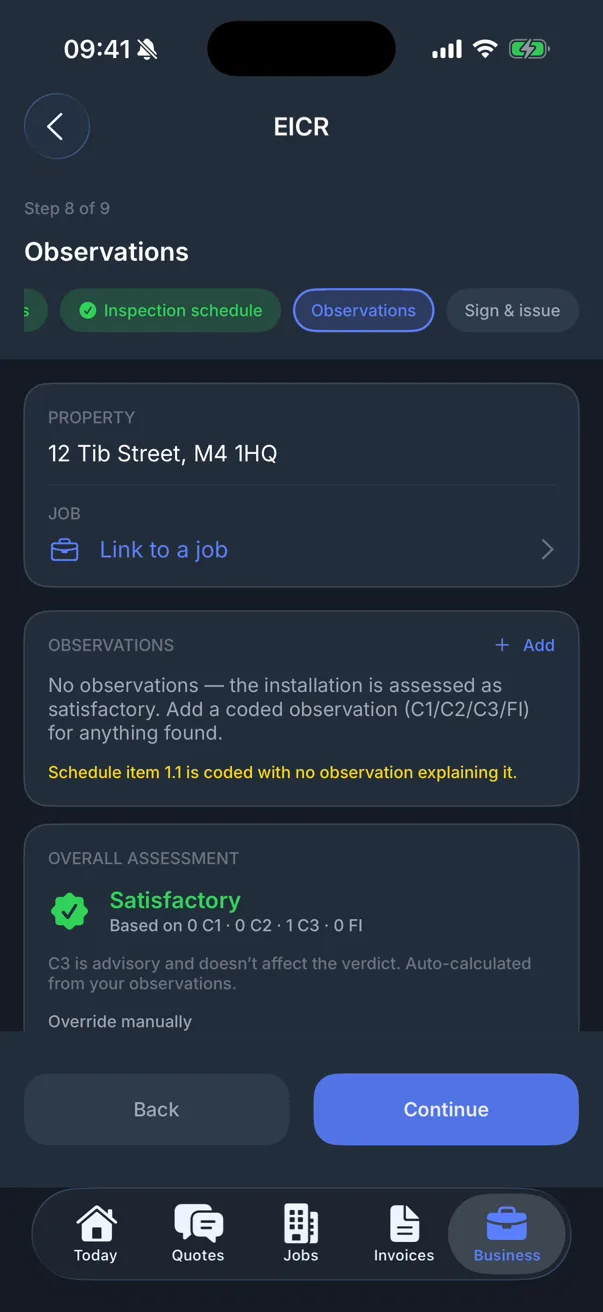
An EICR is a report, not a certificate. It records the condition of an existing installation after a periodic inspection and test, codes anything wrong as C1, C2, C3 or FI, and says whether the installation is satisfactory for continued use. Landlords need one at least every five years, and owner occupiers are advised to have one at least every ten.
If you are doing one, read our step by step EICR guide and our explainer on EICR codes.
Which work has to be notified?
In England, electrical work in homes must meet Part P of the Building Regulations, and some of it must also be notified to building control. Under Approved Document P, notifiable work is:
- Installing a new circuit.
- Replacing a consumer unit.
- Adding to or altering an existing circuit in a special location, meaning a room with a bath or shower, within the zones around it.
How notification works
Most electricians notify through a competent person scheme, such as NICEIC or NAPIT, which lets them self certify and notify building control on the customer's behalf. The customer then receives a Building Regulations compliance certificate. An installer who isn't registered has to use a registered third party certifier or apply to building control before starting. Wales has its own rules, so check locally.
Notification is separate from the BS 7671 certificate. Notifiable work needs both: the EIC or Minor Works for the work itself, and the notification for building control.
All three on your phone
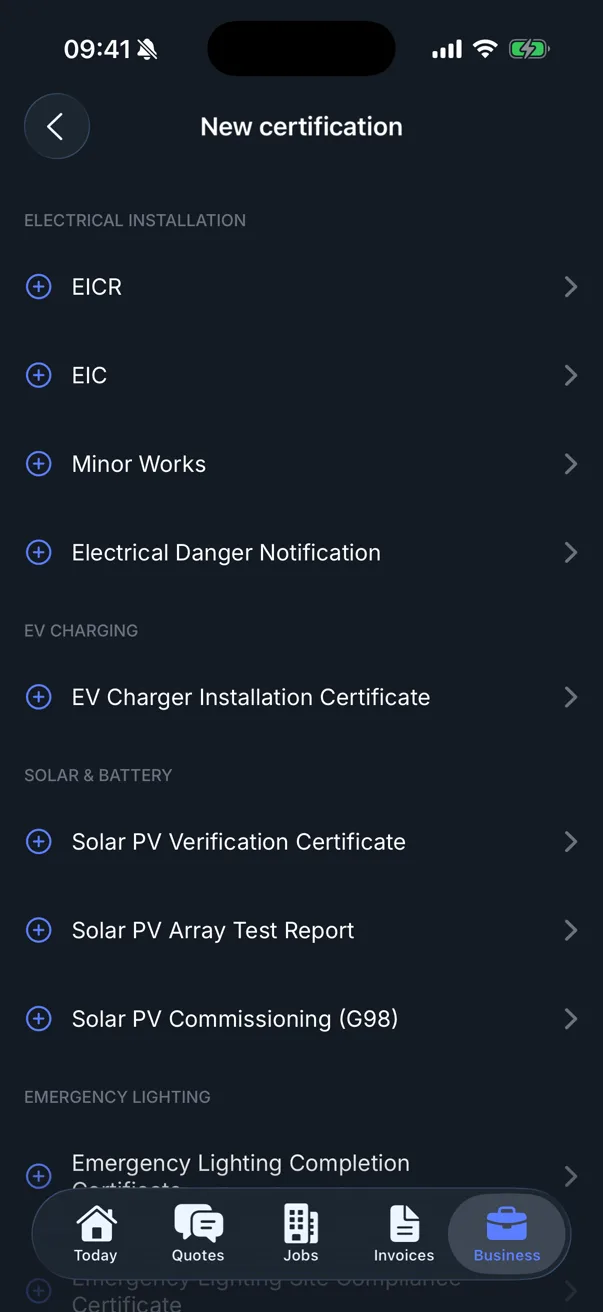
Traddie has the EIC, EICR and Minor Works certificates, built to the BS 7671 model forms including Amendment 4, along with an Electrical Danger Notification, EV charger and solar PV certificates. Start the right one from the job, fill it in on site, collect signatures on screen and send the PDF before you leave.
Common questions
What is the difference between an EIC and an EICR?
An EIC certifies new electrical work: that it was designed, built, inspected and tested to BS 7671. An EICR reports on the condition of an installation that already exists. You get an EIC when work is done, and an EICR when someone wants to know if what is there is still safe.
When is a Minor Works certificate used?
For additions and alterations to an existing circuit that do not include a new circuit, for example adding a socket outlet, a fused spur or a light point to a circuit that is already there.
Does a consumer unit change need an EIC or a Minor Works?
An EIC. Replacing a consumer unit is treated as new installation work, and in England it is notifiable under Part P.
Can an EIC be used instead of an EICR for a landlord?
In some cases. In Scotland the statutory guidance says a recent EIC can stand in for an EICR if it is no more than five years old and its next inspection date has not passed. In England, landlords need a report on the installation at least every five years.
What is an Electrical Danger Notification?
A form many electricians use to record and hand over a dangerous situation they have found, separate from a certificate or report, so the person responsible has it in writing.