The quickest way to do an EICR: 10 time savers that don't cut corners
Ten ways electricians save time on an EICR without cutting corners: info before you arrive, board scanning, testing in order and a report sent before you go.
By Kian McKiernan, founder of Traddie. Sources linked throughout; see also our editorial policy.
Where the time goes on an EICR
Ask electricians where an EICR loses time and the answers are rarely the testing itself. It is waiting for access, hunting for the last report, arguing about what was in scope, writing readings on paper and typing them up that evening, and chasing the landlord for a signature. The ten savers below go after those, in the order you meet them on a job.
One rule first: nothing here touches safe isolation, sampling or coding. Those are the parts that make a report worth having, and they are where you should spend the time you save. If you want the full process, read our step by step guide to doing an EICR.
1. Fill the report in on your phone as you go
The single biggest saving is not having a second job. If you write readings on a pad and type them into software at night, you do the EICR twice. Filling it in on your phone at the board means the report is finished when the testing is.
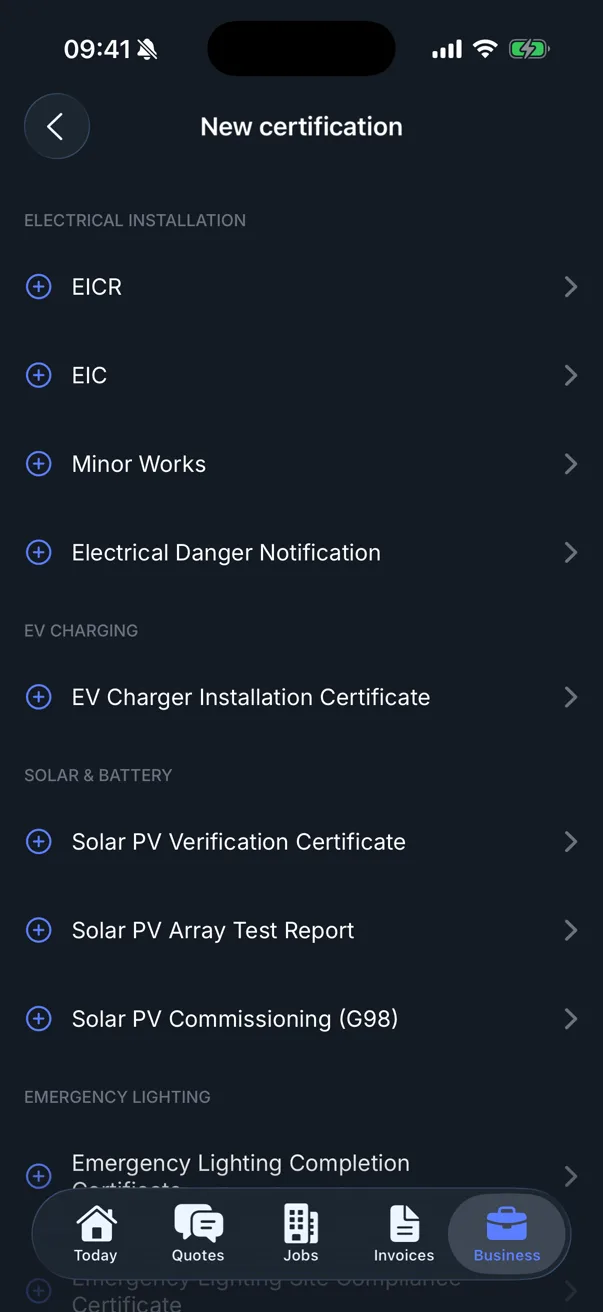
Traddie's EICR follows the BS 7671 model forms, including the Amendment 4 changes, in steps you fill as you work: supply and earthing, circuits, test results, the inspection schedule, observations, then sign and issue. It also holds your quotes, jobs and invoices, so the remedial quote can go out from the same app before you leave.
2. Get the information before you arrive
When you book the job, ask for the previous EICR, how many consumer units there are, whether there are outbuildings, and who will be there to let you in. Ask the landlord or agent to tell the tenant the power will be off for a while. Five minutes on the phone saves an hour of waiting and a wasted second visit.
3. Agree the extent and limitations up front
Agree the sampling and what you won't be able to access before you start, in writing. It stops the end of the job turning into a debate, and it means you can work through the property in one go without stopping to ask.
4. Photograph the board instead of typing the circuits
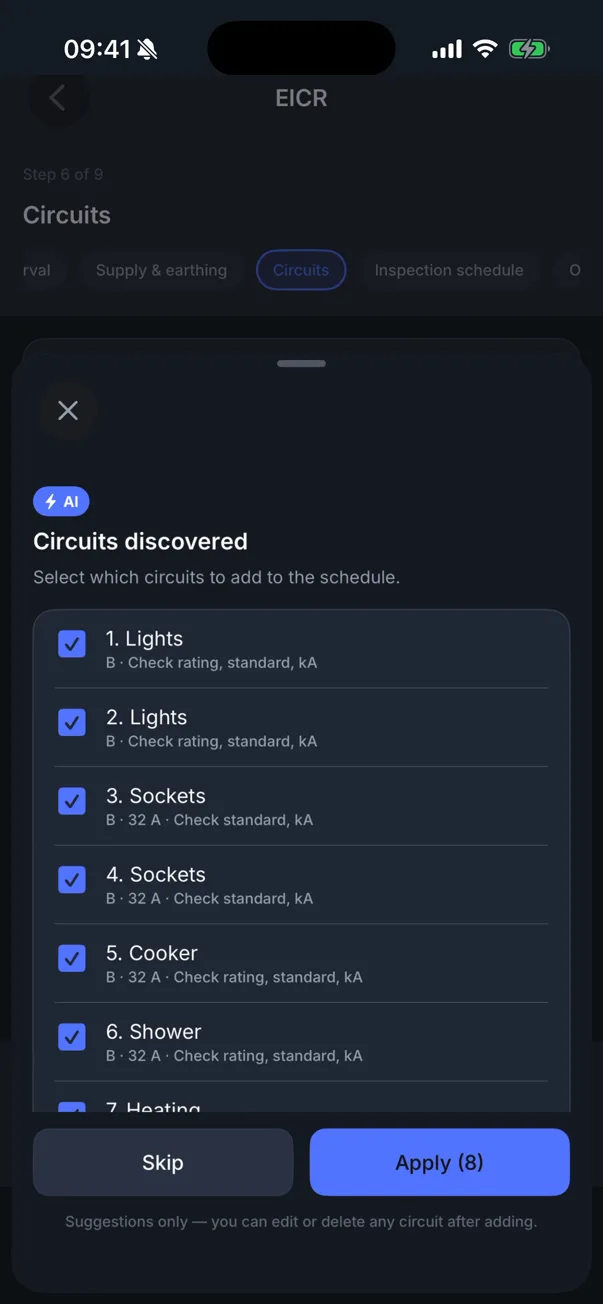
Typing out every circuit description, device type and rating is slow on a phone. In Traddie, photograph the consumer unit and it reads the circuits into the schedule: way number, description, device type and rating. It flags anything it isn't sure of for you to check, and you can edit or delete any circuit before you add it.
5. Test in a set order
Work out a sequence and stick to it on every job: all the dead tests circuit by circuit while you are isolated, then restore the supply and do the live tests in one pass. Fewer trips back and forth to the board means fewer chances to miss something and less time with the power off.
6. Let the software work out the limits
Looking up the maximum Zs for every device and checking the minimum insulation resistance is the sort of job a computer should do. Traddie shows the maximum Zs for the protective device and the minimum insulation resistance under each box as you type, so a reading that is out shows up while you are still at the circuit, not when you read the report back that evening.
7. Mark the inspection schedule as you walk round
Fill in the schedule of inspections room by room as you go, rather than from memory at the end. Mark every item you actually inspected, record the ones that don't apply, and resist the temptation to tick everything acceptable in one go unless you really have checked it.
8. Photograph observations where you find them
Take a photo of each defect when you find it and keep it with the job. It saves describing it in detail later, it shows the client exactly what you mean, and it protects you if the coding is ever questioned.
9. Quote the remedial work while you are there
If the report is unsatisfactory, the landlord has 28 days to get the work done under the England regulations. Sending the remedial quote with the report, rather than days later, is quicker for you and for them, and it is far more likely to come back as a job.
10. Sign, issue and send before you leave
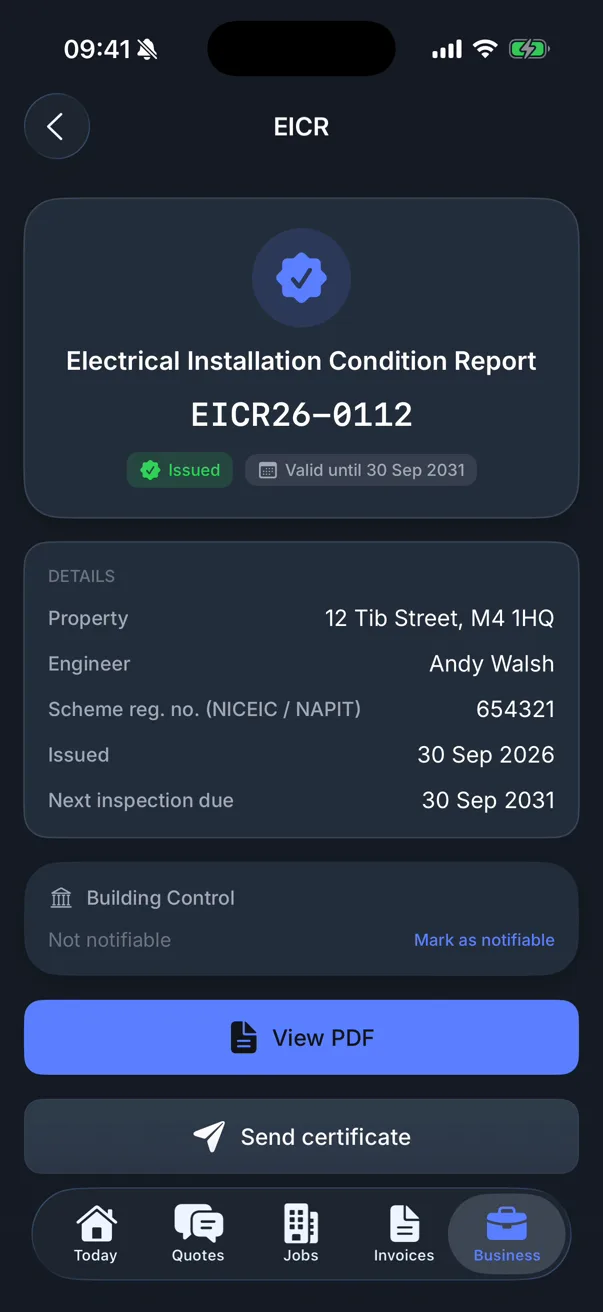
Get the signatures on screen, issue the report and send the PDF to the client from the property. No printing, no scanning, no evening of emailing. In Traddie the next inspection date becomes a renewal reminder too, so the repeat job comes back to you in five years instead of going to whoever the agent rings first.
What you should never speed up
Safe isolation, your sampling decisions, and the classification of what you find. A fast EICR that misses a C2 is worth nothing to the client and a liability to you. Every minute you save on paperwork is a minute you can spend looking properly.
And from 15 October 2026, make sure the report is to BS 7671:2018+A4:2026. Using a form for the withdrawn edition after that date is a quick way to have to do the paperwork twice.
Common questions
What is the quickest way to do an EICR?
Prepare before you arrive, agree the extent and limitations up front, fill the report in on your phone as you go, let the software read the circuits from a photo of the board and work out the limits for each reading, and issue the report on site. Don't rush safe isolation, sampling or coding.
What is the best EICR app?
Look for an app that follows the BS 7671 Amendment 4 model forms, works on your phone on site, reads circuits from a photo, shows maximum Zs as you type, captures signatures and sends the PDF straight away. We make Traddie, which does all of that and also handles your quotes, jobs and invoices.
How long should an EICR take?
There is no fixed time. It depends on the number of circuits and boards, the age and condition of the installation, the sampling agreed and access. A small flat is far quicker than a large house with outbuildings.
Can I reuse information from the last EICR?
Yes, as a starting point. The previous report tells you the circuits, the earthing arrangement and past observations. You still have to inspect and test the installation as it is today and record your own results.