How to fill in a landlord gas safety record (CP12): a step by step guide
How to fill in a landlord gas safety record (CP12): what the law says it must include, the checks behind each box, the 28 day rule, and how to do it faster.
By Kian McKiernan, founder of Traddie. Sources linked throughout; see also our editorial policy.
What is a landlord gas safety record?
A landlord gas safety record is the written record of the annual gas safety check that landlords must arrange for every gas appliance and flue they provide. The duty comes from regulation 36 of the Gas Safety (Installation and Use) Regulations 1998.
Most people still call it a CP12, from CORGI Proforma 12, the form engineers used before Gas Safe Register took over from CORGI in 2009. There is no official form any more. The law sets out what the record must contain, and you can use any layout that includes it all.
The landlord's duties, in short
You are the one doing the check, but knowing the landlord's side helps you set the right expectations and win the repeat work.
- Each appliance and flue must be checked within 12 months of installation, then at least every 12 months.
- A check done in the 2 months before the deadline is treated as done on the deadline, under regulation 36A. So a landlord can book you 10 or 11 months in without losing the renewal date.
- Existing tenants must get a copy within 28 days of the check.
- New tenants must get a copy before they move in. For lets of 28 days or less, it can be displayed in the property instead.
- The record must be kept until there have been two further checks.
What the record must include
Regulation 36(3) lists what the record has to contain. If your form covers all of these, it is a valid record, whatever it is called.
- The date the check was carried out.
- The address of the property where the appliance or flue is.
- The name and address of the landlord, or their agent.
- A description and the location of each appliance and flue checked.
- Any safety defect identified and any remedial action taken.
- Confirmation that the check covered the matters in regulation 26(9).
- The name, signature and Gas Safe registration number of the engineer who carried out the check.
What the safety check must cover
The check must include, but isn't limited to, the four things in regulation 26(9). Each box on a good record maps back to one of them.
- The effectiveness of any flue.
- The supply of combustion air.
- The operating pressure or heat input, or where necessary both.
- Its operation, so as to ensure it is functioning safely.
Step 1: Record the property and landlord
Start with the date, the full address of the property and the landlord's or agent's name and address. If you are working for a letting agent, get the landlord's details from them when you book: a record with only the agent on it is fine, but a record with neither is not.
Step 2: List each appliance and flue
Record every gas appliance and flue in the property that the landlord provides: the boiler, the hob or cooker, any gas fire. For each one, note where it is, the make and model, and the type, such as room sealed or open flued. Appliances that belong to the tenant aren't the landlord's duty, but the flue serving them may be, so note what you checked.
Step 3: Check the flue
Check the flue is effective for each appliance: the termination, the route where it is visible, the joints and the support. For open flued appliances, carry out the flue flow and spillage tests. Record the result for each appliance.
Step 4: Check the combustion air and ventilation
Check the appliance has the combustion air it needs and that any required ventilation is present, the right size and not blocked. Blocked air bricks and vents are one of the most common findings in rented homes.
Step 5: Check the operating pressure or heat input
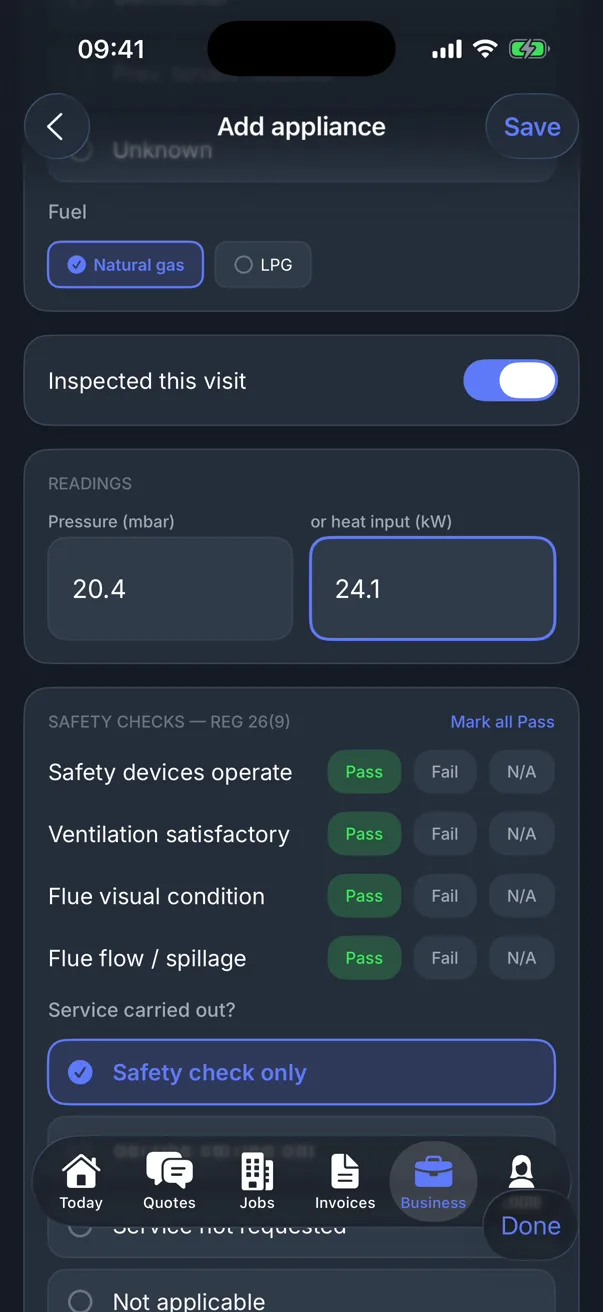
Check the operating pressure or the heat input, or both where necessary, and compare them against the appliance data plate and the manufacturer's instructions. Working out the gas rate from the meter and a stopwatch is where a calculator usually comes out, and where mistakes creep in.
Step 6: Check it operates safely
Check the appliance works safely, including its safety devices, and that the combustion performance is right where you test it with an analyser. Most engineers also carry out a tightness test on the installation as part of the visit, and record it.
It is also worth noting whether there is a carbon monoxide alarm in the room. In England, landlords must fit one in any room used as living accommodation that has a fixed combustion appliance, other than a gas cooker.
Step 7: Record defects, action taken and warning notices
Record any safety defect and what you did about it. If you find an unsafe situation, follow the Gas Industry Unsafe Situations Procedure, IGEM/G/11: classify it as Immediately Dangerous or At Risk, take the action the procedure requires, issue a warning notice, and record it on the gas safety record.
A record with a defect on it is still a valid record. It tells the landlord what needs doing, and it is the reason the check exists.
Step 8: Sign and issue the record
Add your name, signature and Gas Safe registration number. An electronic signature is fine. Give the record to the landlord or agent straight away, and remind them they have 28 days to get a copy to the tenant. Sending it from the property makes that easy for them.
The quickest way to fill in a gas safety record
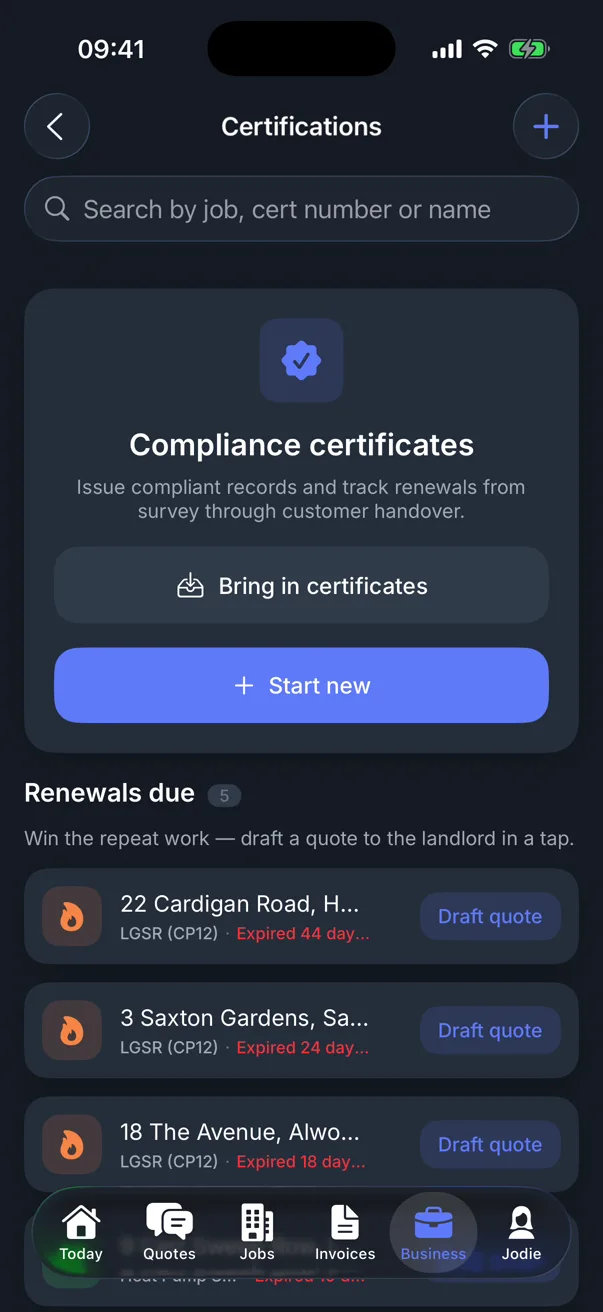
Most of the time on a gas safety record goes on typing details you already have in front of you, doing the gas rate sum, and getting the paperwork to the landlord. Here is how to cut that down.
- Fill it in on your phone at the property, not on paper to type up later.
- Start the record from the job, so the address and landlord carry across instead of being typed again.
- Photograph the appliance data plate and let the app fill in the make, model and serial number for you to check.
- Let the app work out the gas rate from the dial size and your stopwatch time, in m³/h and kW, and compare it with the data plate.
- Get the signature on screen and send the PDF to the landlord before you leave.
- Set a renewal reminder, so the landlord hears from you, not someone else, before next year's check is due.
Doing gas safety records in Traddie
Traddie does all of the above. Start a landlord gas safety record from the job and the property details come with it. Scan the data plate for the appliance details, enter the dial and the time and it gives you the gas rate in m³/h, ft³/h and kW gross and net against the data plate, and record defects and warning notices on the same record. You sign on your phone, the landlord gets the PDF straight away and can find every certificate for the property in their customer portal. When next year comes round, Traddie reminds you, and can remind them.
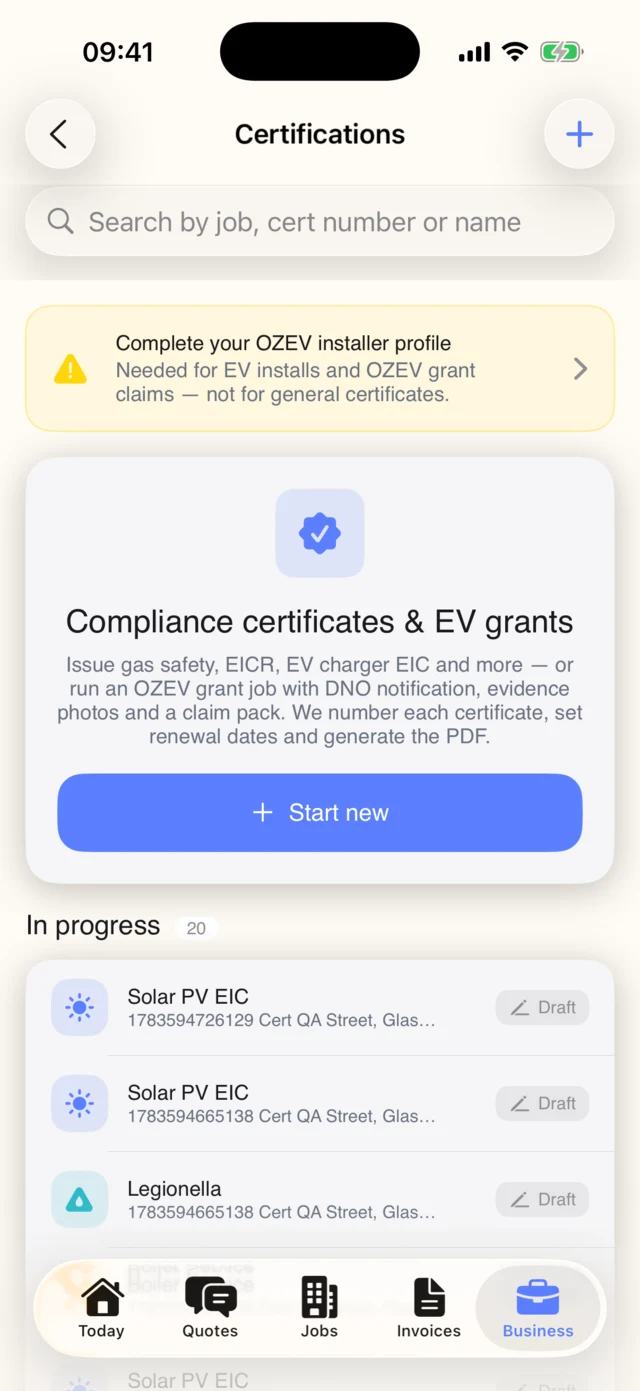
Traddie covers boiler service records and the Benchmark commissioning record too, alongside electrical, PAT, smoke alarm and emergency lighting certificates.
Common questions
What is a CP12?
CP12 stands for CORGI Proforma 12, the form gas engineers used before the Gas Safe Register replaced CORGI in 2009. People still call any landlord gas safety record a CP12, but there is no official form now. What matters is that the record contains everything regulation 36 requires.
What must a landlord gas safety record include?
The date of the check, the address of the property, the name and address of the landlord or agent, a description and location of each appliance and flue checked, any safety defect found and the remedial action taken, confirmation that the required safety checks were carried out, and the engineer's name, signature and Gas Safe registration number.
How often does a landlord need a gas safety check?
Every appliance and flue must be checked within 12 months of being installed and then at intervals of no more than 12 months. If the check is done in the 2 months before the deadline, it counts as done on the deadline, so the landlord keeps the same renewal date.
How long does a landlord have to give the tenant a copy?
Existing tenants must get a copy within 28 days of the check. New tenants must get a copy before they move in. For lets of 28 days or less, the record can be displayed prominently in the property instead.
Can a gas safety record be electronic?
Yes. The record can be issued and signed electronically, as long as it contains everything the regulations require and the tenant can get a copy.
Who can do a gas safety check?
Only an engineer on the Gas Safe Register who is qualified for the type of appliance being checked. Tenants and landlords can check the engineer's ID card and the categories they are qualified in.
Sources
- Gas Safety (Installation and Use) Regulations 1998, regulation 36
- Gas Safety (Installation and Use) Regulations 1998, regulation 36A
- Gas Safety (Installation and Use) Regulations 1998, regulation 26
- IGEM/G/11, Gas Industry Unsafe Situations Procedure
- GOV.UK, Smoke and Carbon Monoxide Alarm (Amendment) Regulations 2022: guidance for landlords and tenants