EICR codes explained: C1, C2, C3 and FI (2026)
What the EICR codes C1, C2, C3 and FI mean, which ones fail a report, what landlords must do about each, and how the rules changed on 15 October 2026.
By Kian McKiernan, founder of Traddie. Sources linked throughout; see also our editorial policy.
The four EICR codes at a glance
Every observation on an Electrical Installation Condition Report gets one of four classification codes. The code tells the person who ordered the report how serious it is and how quickly it needs dealing with. If more than one code could apply, the electrician uses the most serious.
- C1: Danger present. Risk of injury. Immediate remedial action required.
- C2: Potentially dangerous. Urgent remedial action required.
- C3: Improvement recommended.
- FI: Further investigation is advised.
C1: danger present
A C1 means someone could be hurt now. Electrical Safety First's Best Practice Guide 4 gives examples such as live parts that can be touched because a blank is missing from a consumer unit, or incorrect polarity at the origin of the installation.
An electrician who finds a C1 should make it safe straight away, with the agreement of the person responsible, for example by isolating the circuit, and explain the danger in writing. A report with a C1 on it is unsatisfactory.
C2: potentially dangerous
A C2 isn't an immediate danger, but it would become one if something else went wrong, such as a fault on a circuit. Examples in the guide include no reliable means of earthing, or an RCD that fails its test. A report with a C2 is unsatisfactory, and the work is urgent.
C3: improvement recommended
A C3 means the installation doesn't meet the current edition of BS 7671 in some way, but it isn't dangerous. A common example in a home is lighting circuits without RCD protection. A C3 doesn't make a report unsatisfactory, and there is no legal duty on a landlord to fix it, although it is often sensible to.
FI: further investigation advised
FI is used when the electrician has seen something that suggests a problem, but couldn't confirm it within the agreed extent of the inspection. For example, a reading that doesn't add up and needs tracing. Best Practice Guide 4 notes that in most homes it should be possible to give a code without further investigation.
This is the code whose meaning has changed. Under BS 7671 Amendment 3, an FI made a report unsatisfactory. Under Amendment 4, which all EICRs must follow from 15 October 2026, it doesn't. NICEIC confirms FI now reads "further investigation is advised" and is grouped with C3.
Which codes make an EICR unsatisfactory?
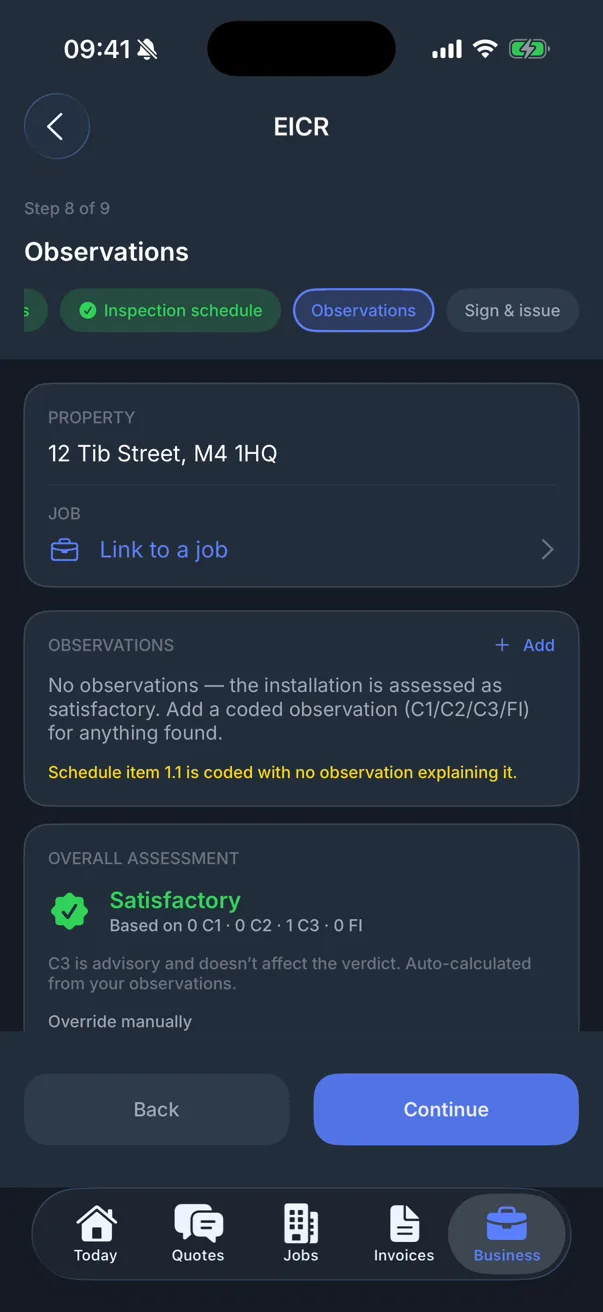
Any C1 or C2 makes the overall condition unsatisfactory. C3 and, from 15 October 2026, FI do not. So a report with ten C3s can be satisfactory, and a report with a single C2 is not.
What landlords must do about each code
In England, the Electrical Safety Standards regulations say that if a report shows remedial work or further investigation is needed, the landlord must have it done by a qualified person within 28 days, or sooner if the report says so. That covers C1, C2 and further investigation. Once it is done, the landlord must get written confirmation and send it to the tenant and the local council within 28 days.
- C1: make safe immediately, then put right within the timescale.
- C2: put right within 28 days, or sooner if the report says so.
- FI: investigate within 28 days, or sooner if the report says so, and fix anything it finds.
- C3: no legal deadline, but worth planning in.
A note for electricians
Coding consistently is what makes a report worth having, and it is where disputes start. Use Best Practice Guide 4 for the examples, write each observation so a landlord can understand it, say where it is, and photograph it. If you are coding FI, be clear about what needs investigating and why.
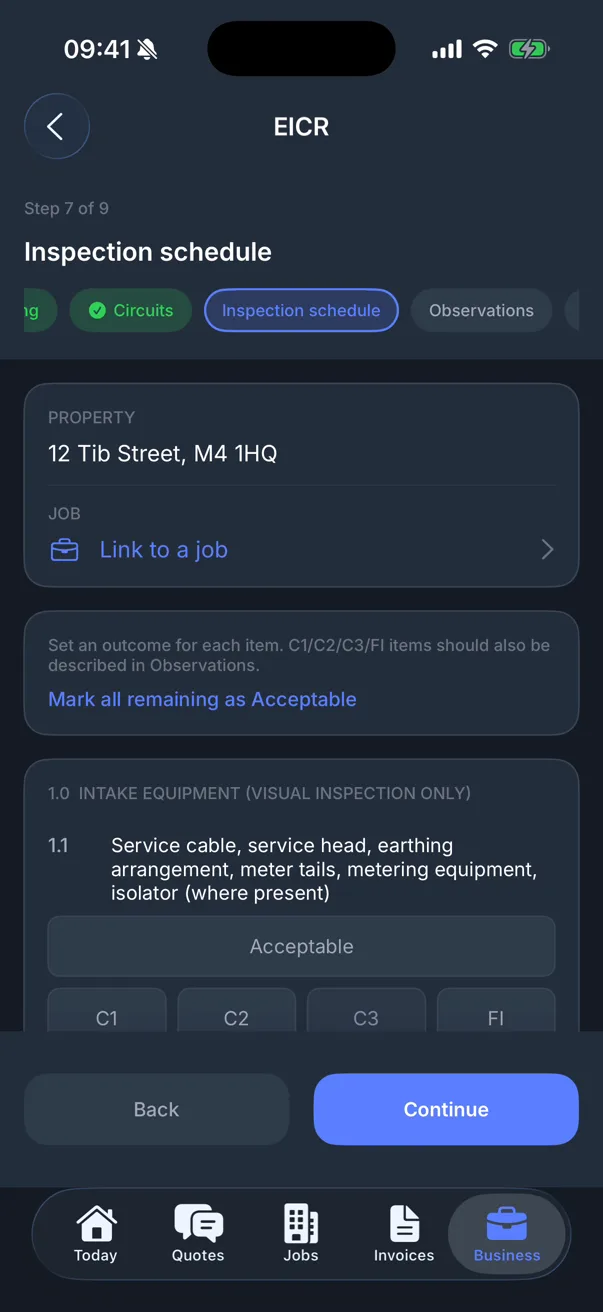
In Traddie, each item on the inspection schedule and each observation gets its code as you work, the overall assessment is worked out from them under the Amendment 4 rules, and the report goes to the client from site. Our step by step EICR guide covers the rest of the process.
Common questions
What does C1 mean on an EICR?
C1 means danger present. There is a risk of injury and immediate remedial action is required. The electrician will usually make it safe there and then, with the agreement of the person responsible.
What does C2 mean on an EICR?
C2 means potentially dangerous, and urgent remedial action is required. It is not an immediate danger, but it could become one, for example if a fault occurred.
Does a C3 fail an EICR?
No. C3 means improvement recommended. The installation can still be satisfactory with C3 observations on the report.
Does FI fail an EICR?
Not any more. Under BS 7671 Amendment 4, which all EICRs must follow from 15 October 2026, FI means further investigation is advised and does not make the report unsatisfactory on its own. Under the previous edition it did.
How long does a landlord have to fix C1 and C2 items?
In England, 28 days from the inspection, or sooner if the report says so. The landlord must then get written confirmation from the electrician and send it to the tenant and the council within 28 days of the work being finished.
Do landlords have to fix C3 items?
There is no legal duty to fix C3 items under the England regulations, because they are not dangerous. Many landlords fix them anyway when other work is being done.