Gas warning notices explained: Immediately Dangerous vs At Risk
What Immediately Dangerous and At Risk mean on a gas warning notice, what the engineer must do, what happens if the customer refuses, and when to report it.
By Kian McKiernan, founder of Traddie. Sources linked throughout; see also our editorial policy.
What a gas warning notice is
When a Gas Safe registered engineer finds an unsafe gas installation, appliance or flue, they follow the Gas Industry Unsafe Situations Procedure, published by IGEM as IGEM/G/11. The procedure sets out how to classify the situation, what to do about it, and what to give the customer. The written record they leave is the warning notice, and the appliance gets a Do Not Use label.
This guide is a plain English summary. IGEM/G/11 is a licensed standard, and engineers should work from the current edition itself.
Immediately Dangerous (ID)
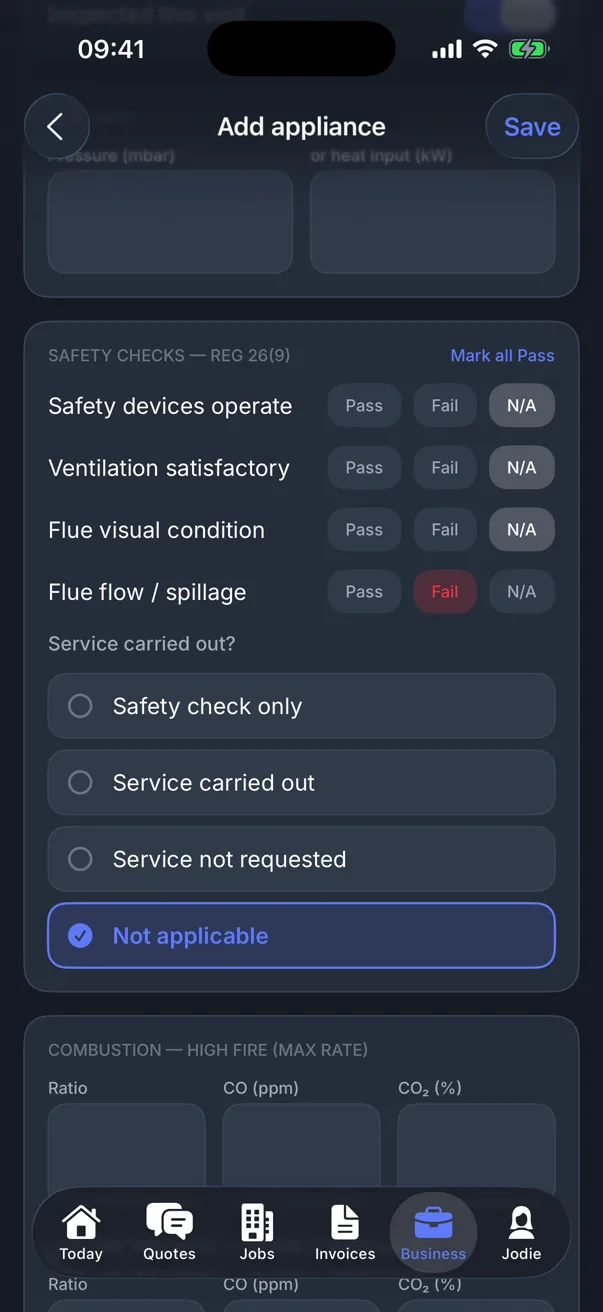
An Immediately Dangerous situation is one where the installation, appliance or flue is a danger to life or property if it is used or left connected to the gas supply. Typical examples are products of combustion spilling into a room, a significant gas escape, or a flue that is blocked or disconnected.
With the customer's permission, the engineer disconnects the appliance from the gas supply, labels it Do Not Use, and gives the customer a warning notice explaining what was found and why.
At Risk (AR)
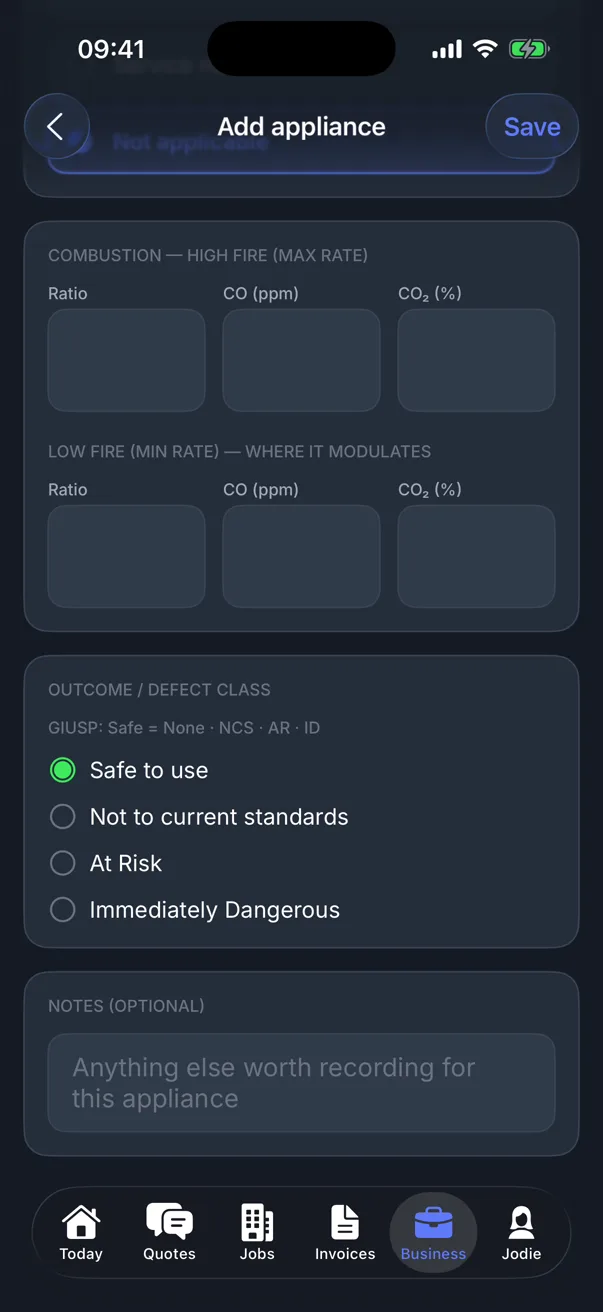
An At Risk situation is one where a fault, or a combination of faults, could become a danger. With the customer's permission, the engineer turns the appliance off, labels it Do Not Use, and issues a warning notice. Where turning it off wouldn't remove the risk, the engineer explains the situation and refers it to whoever can deal with it.
What happened to Not to Current Standards?
Older notices often used a third category, Not to Current Standards (NCS), for installations that met the rules when fitted but not today's. Under the current edition of the procedure, IGEM/G/11 Edition 2 with amendments in July 2022, June 2024 and July 2025, there is no longer a requirement to record NCS situations, because a situation that only falls short of current standards isn't in itself unsafe.
It is still good practice to point them out to the responsible person and suggest a fix, which is why many forms, Traddie's included, still have an NCS option alongside Safe, At Risk and Immediately Dangerous.
If the customer refuses
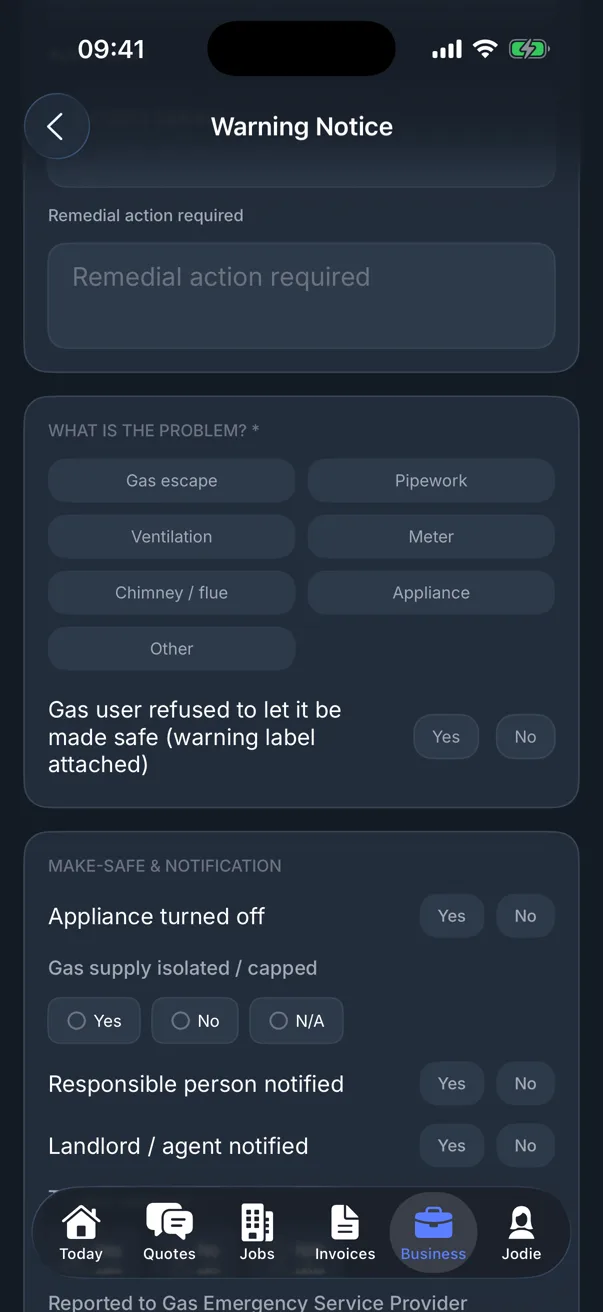
The engineer needs the customer's permission to turn off or disconnect an appliance, and can't force it. If a customer refuses with an Immediately Dangerous situation, the engineer should explain the danger, issue the warning notice, and contact the gas emergency service on 0800 111 999. The gas transporter has powers to enter and make the supply safe.
Reporting to HSE under RIDDOR
Gas Safe registered engineers have a duty to report certain dangerous gas fittings to HSE under RIDDOR: where the design, installation, modification or servicing of a fitting could lead to a gas escape, incomplete combustion or poor removal of combustion products, with a risk of death, unconsciousness or hospital treatment. HSE says that in practice this means situations classed as Immediately Dangerous, and that you should still report it even if you have since repaired it. Fittings that are dangerous only because of a lack of maintenance aren't reportable under this duty. Reports are made with HSE's online dangerous gas fitting form.
Warning notices for landlords
A gas safety record with an Immediately Dangerous or At Risk finding on it is still a valid record. It tells the landlord what needs doing, and the appliance mustn't be used until it is put right by a Gas Safe registered engineer. Record the warning notice on the gas safety record itself, as well as giving the separate notice.
Issuing warning notices in Traddie
Traddie includes gas warning notices alongside landlord gas safety records, boiler service records and the Benchmark commissioning record. Record what you found and the action you took on site, and send the customer the notice straight away, so there is a clear record of what you told them and when. See our guide to filling in a gas safety record for the rest.
Common questions
What does Immediately Dangerous mean on a gas warning notice?
It means the appliance, pipework or flue is a danger to life or property if it is used or left connected. With the customer's permission, the engineer disconnects it from the gas supply and labels it Do Not Use.
What does At Risk mean on a gas warning notice?
It means one or more faults could become a danger. With the customer's permission, the engineer turns the appliance off and labels it Do Not Use. Where turning it off would not remove the risk, the engineer explains why and refers it on.
What happens if a customer refuses to let the engineer disconnect an Immediately Dangerous appliance?
The engineer cannot force it, but must explain the danger, issue the warning notice and contact the gas emergency service on 0800 111 999. The gas transporter has powers to make the situation safe.
Is Not to Current Standards still used?
The current procedure no longer requires NCS situations to be recorded, because they are not in themselves unsafe. Many engineers still note them as advice to the customer, with a suggested fix, and many forms still have an NCS option for that.
Can I use an appliance with a warning notice on it?
No. Don't use it, and don't reconnect or turn it back on, until a Gas Safe registered engineer has put it right.
Sources
- IGEM/G/11, Gas Industry Unsafe Situations Procedure
- East Dunbartonshire Council, gas industry unsafe situations procedure (summary of the 2022 changes, including NCS)
- HSE, examples of reportable incidents under RIDDOR, including dangerous gas fittings
- HSE, report of a dangerous gas fitting (online form)
- Gas Safety (Installation and Use) Regulations 1998, regulation 26